TechDirt has a good post outlining the tension between competition and standardization qua economic forces. It's relatively short and definitely worth the read.
Showing posts with label Economics. Show all posts
Showing posts with label Economics. Show all posts
Tuesday, January 22, 2008
Wednesday, December 12, 2007
Friday, November 30, 2007
Thursday, November 15, 2007
"Economic Sclerosis"
Cato has an excellent post entitled "Treating Successful Taxpayers Like Pinatas" in which the author quotes another piece dealing with the inherent problem of a society wherein a large portion of the electorate does not pay taxes. I highly recommend reading it and even following up by reading the several pieces to which it refers.
Cotton Subsidies
The BBC has an article about US cotton subsidies in which the stupidity of government intervention in economic matters shines through pretty clearly:
"John Negroponte was defending ongonig subsidies on US cotton growers during a visit to Burkina Faso, in west Africa.Now, just as an aside, I would like to point out that the complaint that the farmers of Burkina Faso not being able to compete against mechanized US firms is, well, stupid. Granted, they have a legitimate complain when it comes to subsidies, but with regard to mechanization (unless this wouldn't have happened without subsidies) is just dumb.
"The country is Africa's leading cotton grower, although it produces just 6% of the amount of cotton the US does.
"The region's small farmers complain that they must compete against highly mechanised, well-subsidised US rivals."
Anyway! The article continues:
"He said the US had worked to promote cotton farming in Burkina Faso by providing aid funds to finance increased production and marketing."So, unless I'm missing something, first the government uses tax money to subsidize an industry (offense #1) then takes more tax money and sends it to the competitors of the people it subsidized with the first batch of tax money so that they can be more competitive. Brilliant! Simply Brilliant!
Income Inequality
TCS Daily has a nice little article about income inequality. While I recommend reading the whole thing (it isn't very long), here is a summary of the points made:
- Those who advocate leaving things up to markets are not necessarily believing in market forces with blind faith. Rather, while we recognize that markets fail and that government intervention is another option, we believe that government fails much more frequently than markets do.
- Income inequality is a poor measure of prosperity. That is, who cares what one's position is relative to someone else's? What really matters is how well off one is in more absolute terms.
Tuesday, November 13, 2007
When X Is Outlawed, Only Outlaws Will Have X
Apparently when something that lots of people want is banned by authorities, an "underground" or "black" market is created. Shocking, I know. This is the harrowing story of two parents confronted with evidence that their son was dealing in contraband at his school:
Billy and his parents had been at odds. The junior at Boulder’s Fairview High School, whose identity has been changed for this story, had been letting his hair grow and was routinely getting it styled. He was buying things without any visible means of income. A few weeks into the 2007 fall semester, he had a brand new iPod. He had new boots, new clothes and was talking about a new car.
“He had no friggin’ job,” his mother, Sue Anne, told Boulder Weekly. “His dad and I won’t let him have a job. We want him focused on school. We want him at Stanford after he graduates, so we don’t need him distracted by a job and all that comes with it. We don’t want him buying videogames and iPods.”
As money became less of an obstacle for Billy, the boy’s parents became more concerned. It had become common to see him with a one- to two-inch-thick wad of cash. They became certain he was dealing drugs. They confronted him.
Indeed, the boy was a dealer, selling "treats" to his fellow students. And by treats, I mean candy. Sweets. Sugar.
“Hey, suddenly it all made sense,” William said. “At this point, we believed that drugs were not a part of it. It was just a bunch of candy. Instead of fearing visits to drug rehab, we had to worry about a dental visit. We went home and laughed about it. We were just so relieved. We were actually kind of proud of him for finding a niche, filling it and making a profit.”
 Because schools are trying to enforce the latest health fad/scare by banning anything that might contain flavor, the market for candy has taken on aspects of the drug trade. This kid was marking up candy he had bought at Costco by 900% and making a killing. At least his parents were cool about it. Some might have reported him (to, um, someone) for being an enabler.
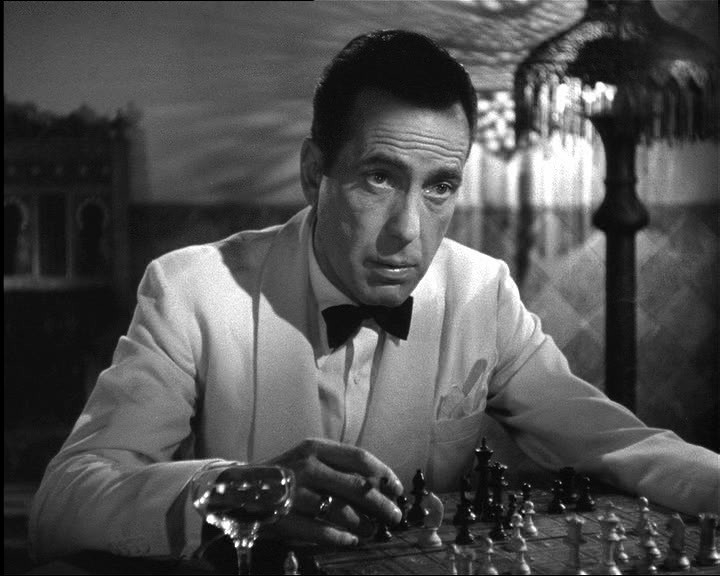
Read the whole thing here, for and this picture →
and more great lines like "a candy ban in public schools turned Austin High School into an underground candy market that resembles 'Willy-Wonka-meets-Casablanca',”
HT Reason
Sunday, November 11, 2007
What, Me Worry?
Mark J. Perry of Carpe Diem on why we are not about to enter a recession. Some very nice comparisons to the S&L meltdown of the 80's bring a new angle to an old debate.
Tax Competition: Once More With Feeling!
Two recent articles highlight the new consensus about tax competition growing among economists on tax competition.
In the first, Kenneth Rogoff, former chief economist for the IMF, has an article in the Daily Star (via Cato-at-liberty) where he muses on the nature of the very wealthy. This is the money quote:
Many super-earners are also super-creative and bring enormous value. Places like the United Kingdom actively court wealthy foreign nationals through extraordinary preferential treatment of their investment income. The ultra-rich are an ultra-mobile group, too. If you are earning $540,000 an hour, it does not take too long to save up to buy an apartment, even in London.The second, also from Cato, is about British race car driver Lewis Hamilton, who has moved to Switzerland. He claims that he wants solitude, but the Mirror notes that he will save about $8 million per year in taxes. As the rich flee high tax jurisdictions, those jurisdictions will continue to complain about the "unfair taxation" that is stealing their God-given tax base.
$39 Billion Tax Writeoff for GM
General Motors has just announces that it will take a huge tax break this year, totaling $39,000,000,000. So that's a good thing for them, right? Wrong. Accountants are now talking bankruptcy. For the best examination of this rather complicated story, read this post from Mises.org's blog.
Tuesday, November 6, 2007
EU vs US Revisited
In the past we have pointed to studies that rank EU nations against individual States in terms of Gross Domestic Product (GDP) adjusted for Purchasing Power Parity (PPP). Normally the EU nations come off poorly by comparison, ranking on average near Alabama or West Virginia.
Now Political Calculations has published an interactive, sortable, table of this data.
Fun Fact: Italy has about half the GDP per capita as Wyoming.
HT Carpe Diem
Monday, November 5, 2007
Thursday, October 18, 2007
Economic Ignorance
CNN is reporting that 46% of Americans believe the US is in the midst of a recession. Be sure to check out the comments to the article, including:
"I don't care what people think about the economy. The bottom line is the economy can me measured by GDP, real income, employment, etc. The actual poll question should be: How many people are duped into thinking the economy is bad?"(emphasis added)etc.
"Wow!! The mainstream media machine should be quite proud of keeping 46% of Americans that ignorant. We've had incredible economic growth in the last 3 or 4 years in spite of record oil prices and the sub-prime mortgage debacle and yet the left-wing media salivates at every opportunity to tell Americans how miserable our lives are. You can say what you want, but I choose not to take part in your "recession" - I know better."
"Where are the poll numbers for the "Pelosi Do Nothing Congress"? 11% approval rating I beleive. The lowest in history.This recession talk just goes to show that if you tell a lie long enough people will beleive it."
"While many people may believe that the U.S. is in a recession, the fact remains that we are not.
This just shows the lack of economic education of the geberal public and the ability of the major media to capitalize on this ignorance for their own purposes.
This story is an attempt to create a story instead of reporting.
I wonder why the story has not corrected the public opinion with the facts?"
"It is stunning how people could possibly think we are in a recession. This poll shows the danger of the negative economic focus of the mainstream news outlets that has clearly misled the public into this false belief. I know people have to also be responsible for their own ignorance, but when their sources of information are misleading it is hard to fault the fools of this poll."
"This story is ridiculous, at the very least a good journalist should include in here that we are definitely NOT in a recession, that the economny has been growing for something like18 straight quarters."
I read over half of all the comments posted as of my reading of the article. I skimmed the rest. I didn't see one favorable comment. That's at least one good thing :-)
Monday, September 17, 2007
CEO Pay
Townhall has a good, one page article entitled "In Defense of CEO Compensation" in which the author presents a nice, concise overview of the defense of high CEO pay. Money quote:
"It's sad that this is the level of economic literacy among the media. If the press ignored advances in other scientific fields as much as they do in economics, we'd see weathermen advising readers to offer sacrifices to the rain gods."Also, as an extra added bonus, the author takes an off-the-cuff shot at unintended consequences of government regulation vis-a-vis corporate raiders.
Secret Economic Force in Currency Exchange Market: Japanese Housewives
If you have five minutes today, read this article from the New York Times about the trend of Japanese housewives investing some of the country's huge amounts of savings in foreign currency exchange.
Wednesday, September 12, 2007
We Should Just Stop Ordering So Much Health Care
Robin Hanson has written a fascinating essay at Cato Unbound in which he claims that Americans are not really being ripped off by anyone when they over-spend on health care, but that they are simply demanding too much of it.
Car inspections and repairs take a small fraction of our total spending on cars, gas, roads, and parking. But imagine that we were so terrified of accidents due to faulty cars that we spent most of our automotive budget having our cars inspected and adjusted every week by Ph.D. car experts. Obsessed by the fear of not finding a defect that might cause an accident, imagine we made sure inspections were heavily regulated and subsidized by government. To feed this obsession, imagine we skimped on spending to make safer roads, cars, and driving patterns, and our constant disassembling and reassembling of cars introduced nearly as many defects as it eliminated.
This is something like our relation to medicine today. Our public today is like a king of old whose military advisors spent most of their time and budget reading omens and making sacrifices, to gain the gods' favor, instead of hiring soldiers and talking battle strategy. These advisors knew omens and sacrifices mattered little, but they saw the king was comforted, and feared losing favor by talking of battle strategy. A truly loyal advisor would have told the king what he did not want to hear: "You are obsessing about the wrong thing."
I have said before that the main cause of our "health care crisis" is that we expect "insurance" to cover all health care costs. Car insurance only kicks in when we manage to inflict more damage on our cars than the deductible will cover. Most people go years between making an insurance claim on their cars, but use their health insurance many times a year. Hanson is claiming that demand for health care has increased to absurd levels, and that the best way to reduce costs is to simply cut back on how much of it we buy. He sites a number of studies that show that most medical spending results in no significant difference in actual health, and in many cases can cause adverse effects. I recommend reading the whole thing, even though it is rather long and detailed. No, in fact I recommend reading the whole thing because it is long and detailed.
Society has been placing more emphasis on health lately, insisting on healthy eating, healthy kitchen appliances, healthy exercise, healthy soda. All this has apparently changed our priorities enough that we now spend one sixth of our income on health.
Personally, I prefer to spend my money on things that don't involve pills and needles.
UPDATE: EconLog is saying that Hanson is more mainstream than one might think.
Corporate Taxes
Here is a video on corporate taxes that I consider a must see for anyone not entirely acquainted with the issue. HT: Club for Growth.
Tuesday, September 11, 2007
NAR and Spin
The Motley Fool has a fun little article on how the NAR has been spinning the decline in housing sales.
Wednesday, September 5, 2007
Economics and Property Rights
Townhall has a short article entitled "Economics and Property Rights" in which the author briefly outlines how such things as property rights and various regulations affect how the laws of economics manifest themselves. Short and sweet - worth the read, though the author could have fleshed out the issue more, e.g., by mentioning the principle of the Tragedy of the Commons.
Tuesday, September 4, 2007
Great article on the housing bubble
From The Motely Fool, comes this headline (and article): "Desperate Realtors Applaud Bailout" with the gem of a subtitle: "The National Association of Realtors likes the idea of a subprime bailout. Big surreise."
Subscribe to:
Posts (Atom)