Showing posts with label Public Health. Show all posts

Tuesday, November 13, 2007

When X Is Outlawed, Only Outlaws Will Have X

Apparently when something that lots of people want is banned by authorities, an "underground" or "black" market is created. Shocking, I know. This is the harrowing story of two parents confronted with evidence that their son was dealing in contraband at his school:

Billy and his parents had been at odds. The junior at Boulder’s Fairview High School, whose identity has been changed for this story, had been letting his hair grow and was routinely getting it styled. He was buying things without any visible means of income. A few weeks into the 2007 fall semester, he had a brand new iPod. He had new boots, new clothes and was talking about a new car.

“He had no friggin’ job,” his mother, Sue Anne, told Boulder Weekly. “His dad and I won’t let him have a job. We want him focused on school. We want him at Stanford after he graduates, so we don’t need him distracted by a job and all that comes with it. We don’t want him buying videogames and iPods.”

As money became less of an obstacle for Billy, the boy’s parents became more concerned. It had become common to see him with a one- to two-inch-thick wad of cash. They became certain he was dealing drugs. They confronted him.

Indeed, the boy was a dealer, selling "treats" to his fellow students. And by treats, I mean candy. Sweets. Sugar.

“Hey, suddenly it all made sense,” William said. “At this point, we believed that drugs were not a part of it. It was just a bunch of candy. Instead of fearing visits to drug rehab, we had to worry about a dental visit. We went home and laughed about it. We were just so relieved. We were actually kind of proud of him for finding a niche, filling it and making a profit.”

Because schools are trying to enforce the latest health fad/scare by banning anything that might contain flavor, the market for candy has taken on aspects of the drug trade. This kid was marking up candy he had bought at Costco by 900% and making a killing. At least his parents were cool about it. Some might have reported him (to, um, someone) for being an enabler.

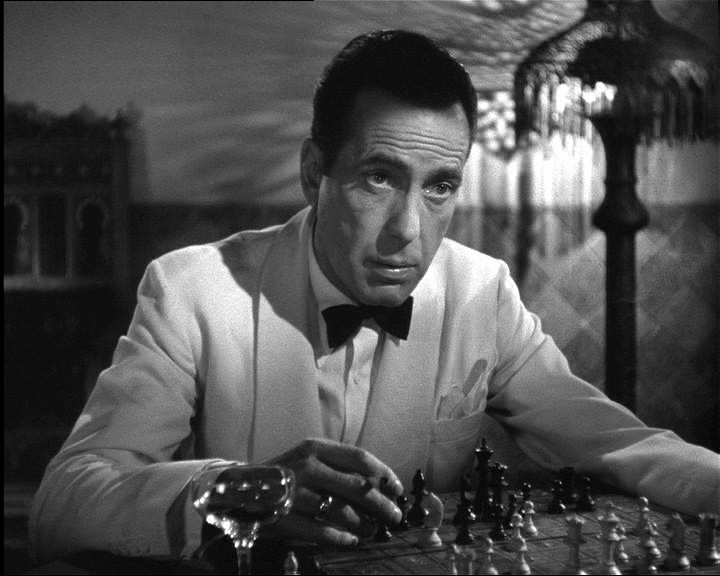
Read the whole thing here, for and this picture →

and more great lines like "a candy ban in public schools turned Austin High School into an underground candy market that resembles 'Willy-Wonka-meets-Casablanca',”


HT Reason

Sunday, November 11, 2007

The Good Lie

Reason has a post about claims by anti-smoking activists that spending 30 minutes in a room with a smoker raises your risk of death to the same levels as someone who smokes. This claim is what we in political blogging call a "lie." But that's ok, since we need to "simplify the facts" for those who are too stupid to draw the conclusions we want them too.

I recomend you read the whole Reason post, but the original article in New Scientist is behind a paywall. There is a link to the author's blog, however, which contains a nice summary, as well as a lot of interesting stuff from the War on Tobacco. I highly recomend giving it a read, especially if you are interested in smoking policy.

Thursday, September 20, 2007

Lead Toys and the Regulators Who Need More Money to Stop Them

MSNBC has an infuriating article about how the Consumer Product Safety Commission has told Congress it needs more money to ensure that lead tainted toys don't make it into the country:

"Leaders of the agency responsible for protecting consumers from faulty products said Wednesday that Congress should increase their budget and power in the wake of huge recalls of lead-contaminated toys.

...

"One of the agency's commissioners said 'we are all to blame' for a system that allowed children to be exposed to lead-tainted toys. That includes 'those who stood by and quietly acquiesced while the commission was being reduced to a weakened regulator,' said Thomas H. Moore, in the first of two days of hearings before a House Energy and Commerce subcommittee.

...

"'Our small agency has been ignored by the Congress and the public for way too long,' said the acting chairman, Nancy A. Nord. 'Our laboratory desperately needs to be modernized.'

...

"Nord noted that the recalls, mainly of toys manufactured in China, have had the intended purpose of goading the entire toy industry into changing practices to prevent such violations in the future.

"It has also inspired the introduction of several bills to increase the authority and budget of the CPSC and better monitor imports from China."
So, in other words, the agency thinks that we should not leave such issues to market forces (even though it acknowledges that such forces are working to correct the problem) but rather that the agency should ensure safety - even though it supposedly doesn't have laboratory equipment sufficient to test for lead and apparently never thought "gee wiz, if we're the one's supposed to be doing this and we can't, maybe we should raise a red flag to someone else in the bureaucracy."

The problem is not that the agency doesn't have enough money or power. Rather the problem is that a) there is no reasonable way that a centralized agency could possible test every batch of every product imported into the country (not to mention those originating inside the country) for every known harmful substance; and b) not only is the agency ill conceived to begin with, it is apparently run and staffed by a bunch of completely incompetent bureaucrats whose solution to their agency failing to perform perhaps the most basic of all of its supposed functions is, of course, more money and more power.

Finally, I would like to point out that the entire article was apparently written by an author who can't think critically about anything. The entire thing is a puff piece about how the agency needs more money. The only salient point is that of the last sentence which states: "Several lawmakers said Mattel blocked committee staff members from visiting the company's plants in China and talking to the Hong Kong executives who oversee those facilities," which, if true, is a big deal. But, regardless of the importance of this point, the author doesn't see fit to pursue
the merits of the claim nor its implications.

Wednesday, September 12, 2007

We Should Just Stop Ordering So Much Health Care

Robin Hanson has written a fascinating essay at Cato Unbound in which he claims that Americans are not really being ripped off by anyone when they over-spend on health care, but that they are simply demanding too much of it.

Car inspections and repairs take a small fraction of our total spending on cars, gas, roads, and parking. But imagine that we were so terrified of accidents due to faulty cars that we spent most of our automotive budget having our cars inspected and adjusted every week by Ph.D. car experts. Obsessed by the fear of not finding a defect that might cause an accident, imagine we made sure inspections were heavily regulated and subsidized by government. To feed this obsession, imagine we skimped on spending to make safer roads, cars, and driving patterns, and our constant disassembling and reassembling of cars introduced nearly as many defects as it eliminated.

This is something like our relation to medicine today. Our public today is like a king of old whose military advisors spent most of their time and budget reading omens and making sacrifices, to gain the gods' favor, instead of hiring soldiers and talking battle strategy. These advisors knew omens and sacrifices mattered little, but they saw the king was comforted, and feared losing favor by talking of battle strategy. A truly loyal advisor would have told the king what he did not want to hear: "You are obsessing about the wrong thing."

I have said before that the main cause of our "health care crisis" is that we expect "insurance" to cover all health care costs. Car insurance only kicks in when we manage to inflict more damage on our cars than the deductible will cover. Most people go years between making an insurance claim on their cars, but use their health insurance many times a year. Hanson is claiming that demand for health care has increased to absurd levels, and that the best way to reduce costs is to simply cut back on how much of it we buy. He sites a number of studies that show that most medical spending results in no significant difference in actual health, and in many cases can cause adverse effects. I recommend reading the whole thing, even though it is rather long and detailed. No, in fact I recommend reading the whole thing because it is long and detailed.

Society has been placing more emphasis on health lately, insisting on healthy eating, healthy kitchen appliances, healthy exercise, healthy soda. All this has apparently changed our priorities enough that we now spend one sixth of our income on health.

Personally, I prefer to spend my money on things that don't involve pills and needles.

UPDATE: EconLog is saying that Hanson is more mainstream than one might think.

Monday, September 10, 2007

Zoned: NFF-1

LA is considering putting a moratorium on fast food restaurants in South LA - a portion of the city with a disproportionate number of fast food establishments per capita, as well as more obesity per capita.

"'The people don't want them, but when they don't have any other options, they may gravitate to what's there,' said Councilwoman Jan Perry, who proposed the ordinance in June, and whose district includes portions of South L.A. that would be affected by the plan."
So, apparently, people don't want to eat at fast food joints, but they do because there aren't other options . . . right.
"'While limiting fast-food restaurants isn't a solution in itself, it's an important piece of the puzzle,' said Mark Vallianatos, director of the Center for Food and Justice at Occidental College."

"This is 'bringing health policy and environmental policy together with land-use planning,' he said. 'I think that's smart, and it's the wave of the future.'"
As Fark would say, "This should end well."
"Fast-food restaurants haven't missed the cue: From their menus, diners can choose salads over burgers, yogurts over shakes and grilled over fried these days. And many food manufacturers have reconfigured their recipes to eliminate trans fats, the most unhealthful unsaturated fats made of partially hydrogenated oils."
So, do people choose those options when they are presented with them or do they keep buying the worse-for-you burgers and fries? If the answer is the later, guess what will happen when they are presented with establishments that sell nothing but better-for-you food.
"The state enacted legislation last year to increase the purchase of fruits and vegetables to be sold in corner stores in lower-income communities.

Rep. Mary Bono (R-Palm Springs) introduced a bill in Congress in June that, among other things, would try to increase the availability of nutritious foods in economically depressed areas."
So, when these don't actually end up doing any good, will the problem be lack of funding?

Tuesday, September 4, 2007

British Cancer Survival Rates

Apparently, while I was gone, some fun figures came out about British health care. This is the best summary I have seen in my collection of feeds, and it contains some nice links to other stuff. From the Telegraph:

Cancer survival rates in Britain are among the lowest in Europe, according to the most comprehensive analysis of the issue yet produced.

England is on a par with Poland despite the NHS spending three times more on health care.

Survival rates are based on the number of patients who are alive five years after diagnosis and researchers found that, for women, England was the fifth worst in a league of 22 countries. Scotland came bottom. Cancer experts blamed late diagnosis and long waiting lists.

In total, 52.7pc of women survived for five years after being diagnosed between 2000 and 2002. Only Ireland, Northern Ireland, Scotland, the Czech Republic and Poland did worse. Just 44.8pc of men survived, putting England in the bottom seven countries.

And soon our government will be bringing the same quality care to our shores. Hooray!

Update: Just found a report that most senior NHS doctors have private insurance, thus avoiding themselves what their patients must undergo.

Mandatory Checkups and Other Things That Keep Me Up At Night

John Edwards is proposing mandatory "preventative care" for all US citizens.

"It requires that everybody be covered. It requires that everybody get preventive care," he told a crowd sitting in lawn chairs in front of the Cedar County Courthouse. "If you are going to be in the system, you can't choose not to go to the doctor for 20 years. You have to go in and be checked and make sure that you are OK."

He noted, for example, that women would be required to have regular mammograms in an effort to find and treat "the first trace of problem." Edwards and his wife, Elizabeth, announced earlier this year that her breast cancer had returned and spread.

Of course this makes perfect sense. If we the people are going to be paying for everyone's health care from birth till death, then we the people have every right to force you to take care of your self as we think best. It is just good public policy. After all, seatbelt laws have been defended with the same argument for years. When someone objects that not wearing a seatbelt hurts no one but oneself, the response is often, "But I have to pay for your hospital bills if you get hurt."

With this rational, anything that might make the average cost of national health care increase becomes a national threat. Alcohol, skydiving, mountain climbing, wilderness hiking, exposure to the sun, bacon, real made-from-cow-milk ice cream, anything can be controlled, limited, rationed, or banned. I will not even mention smoking, since it is on its way to being banned already.

Some people may think I am being hyperbolic for rhetorical reasons, a habit I am in truth not above. Sit back, however, and think over the last 40 years. Children used to run around their neighborhood playing. Now they can't be in the back yard alone. People used to be able to order a hamburger rare, now most chain restaurants daren't offer the option. We used to be able to walk on to a plane wearing shoes. 18 year olds used to be trusted to drink responsibly (and are still trusted to use fully automatic weapons and tanks responsibly). Little freedoms we used to take for granted are being taken away one at a time. Calls for restrictions and limitations "for our own good" are becoming ever more common. From hanging a picture without a license to drinking caffeinated beer, all aspects of our lives are coming under the control of a government we continue to expect to "do something." After all, it is for the common good. We can't allow you to continue to run around selfishly risking your health, then expecting us to pay for it.

And that is the key. Selfishness. People are selfish. If you tell someone that their rich uncle is buying lunch, they are much more likely to order the steak and lobster. Any plan that would work if only people would be less selfish is doomed. The only way to control selfishness is to ensure people bear the costs and benefits of their actions themselves. If people are not free to both succeed and fail, the incentives are for ever greater risk taking.

HT Club for Growth


Update: Read a similar rant on this here

Saturday, September 1, 2007

Caffeinated Beer? That Sounds Great! Let's Ban It!

From US News and World Report:

State attorneys general have asked the federal government to crack down on beers that contain caffeine, saying the alcoholic energy drinks pose serious health and safety risks.

Thirty attorneys general called for an investigation of promotional claims that the drinks provide energy and power, while explicitly appealing to teenagers and young adults, who equate partying with staying up late. "Who's up for staying out all night?" says a promotion for Bud Extra, one of the drinks cited by the attorneys general in their letter to the Alcohol and Tobacco Tax and Trade Bureau.

Obviously any beverage that someone might enjoy drinking must be bad. I love the fact that Bud Extra had the line "You can sleep when you're 30" on it, at least until they were "asked nicely" to take it off by government busy-bodies. We wouldn't want to imply that people under 30 drink, would we?

Wednesday, August 22, 2007

World Health Rankings

Townhall has an interesting article regarding why the US ranks so low on WHO's Health Care Study. Worth the read for the "why its important to understand the stat" aspect alone.

Thursday, July 26, 2007

Ah, But What Does Your Free Buy You?

Massachusetts' mandatory health insurance law has made insurance available to everyone. What it haven't made available are actual doctors. The Wall Street Journal has a report on what happens to people who sign up for their first health insurance.

On the day Ms. Lewis signed up, she said she called more than two dozen primary-care doctors approved by her insurer looking for a checkup. All of them turned her away.

Her experience stands to be common among the 550,000 people whom Massachusetts hopes to rescue from the ranks of the uninsured. They will be seeking care in a state with a "critical shortage" of primary-care physicians, according to a study by the Massachusetts Medical Society released yesterday, which found that 49% of internists aren't accepting new patients. Boston's top three teaching hospitals say that 95% of their 270 doctors in general practice have halted enrollment.

For those residents who can get an appointment with their primary-care doctor, the average wait is more than seven weeks, according to the medical society, a 57% leap from last year's survey.
...
A principal reason: too little money for too much work. Median income for primary-care doctors was $162,000 in 2004, the lowest of any physician type, according to a study by the Medical Group Management Association in Englewood, Colo. Specialists earned a median of $297,000, with cardiologists and radiologists exceeding $400,000.

At the same time, the workweek for primary-care doctors has lengthened, and they are seeing more patients. The advent of managed care in the mid-1990s added to the burden as insurance companies called on primary-care doctors to serve as gatekeepers for their patients' referrals to specialty medicine.

In Massachusetts, the state-subsidized plans, collectively called Commonwealth Care, are provided by private insurance companies. Patients can choose from among six options. Residents who make between one and three times the poverty level ($48,000 for a family of three) are now eligible for coverage under the plan. Doctors are reimbursed by insurance providers -- at below-market rates comparable with Medicaid reimbursements.

I can only hope that the debacle in the Commonwealth will serve as a warning before we end up with national healthcare.

HT Don Luskin

Oh No! She Caught The Fat!

I always knew I should shun unattractive people. Now I have science on my side! A new study shows that obesity is contagious, like the flu, or the gay.

Obesity appears to spread from one person to another like a virus or a fad, researchers reported yesterday in a first-of-its-kind study that helps explain -- and could help fight -- one of the nation's biggest public health problems.
...
"What spreads is an idea. As people around you gain weight, your attitudes about what constitutes an acceptable body size changes, and you might follow suit and emulate that body size," Christakis said. "It may cross some kind of threshold, and you can see an epidemic take off. Once it starts, it's hard to stop it. It can spread like wildfire."

Like wildfire! What could possibly stop this spread of fatness? Well, the study goes on to say that a radical combination of not eating burgers everyday and moving about occasionally might help, but they need more funding to continue research. They also suggest that spreading images of a healthy, thin lifestyle can act as an antibody, preventing the fat from spreading any further.

"If these close social environments can promote a disease, they can also promote solutions to disease," said William H. Dietz of the federal Centers for Disease Control and Prevention. "These same social networks might be used to turn a disease like obesity around."

I have already been contacted by scientists hoping to use my physique to inspire the masses, but I warned them that if fat people knew such perfection was possible, it would probably drive them to suicidal despair. Which is the other reason I avoid those contagious fat people: for their own good.


HT Reason

Tuesday, July 17, 2007

Cigar Tax

Apparently, there is currently a $.048 per cigar tax cap. If a new bill winding its way through the Senate is passed, that cap would rise to $10 - an increase of 20,000%:

"'I'm not sure in the history of man, since our forefathers founded the country in 1776, that there's ever been a tax increase of 20,000 percent,' said Newman, who runs the Tampa business founded by grandfather Julius Caesar Newman. 'They had the Boston Tea Party for less than this.'

...

"'Why don't we just go out of business?' Newman said. 'Here, you can run our company, Mr. Government.'

...

"The [Cigar Association of America] has lobbied to exclude cigars from the bill, but bristles at the public relations challenge: How do you oppose a sin tax Congress has rigged to help sick kids?"
HT: Drudge Report

Thursday, July 12, 2007

First Trans-Fat Statewide Ban?

Guess which state (or should I say Commonwealth) is moving towards banning those delicious fatty foods?

Hint:

Saturday, June 23, 2007

Democrats Offer Universal Health Care. Republicans offer ...

National Review has an article pointing out that unless the Republican candidates put forward an alternative to the universal health care proposals being floated by their opponents, they will lose the issue to the left. It is a good summary of the arguments against government-run health care, although it contains nothing really groundbreaking.

On a related note, Michael Cannon at Cato-at-Liberty makes an excellent point about insurance and free markets that I dearly wish I had made myself.

GEICO is for-profit. Like Humana, GEICO takes its customers’ money and every claim paid is a loss to the company. Those incentives are the same. Yet we don’t have an auto repair crisis. In fact, GEICO boasts on the radio that it pays claims so quickly, it steals other insurers’ customers. Why the difference?

I would venture that the main difference between auto insurance and health insurance is that you are ultimately responsible for the cost of maintaining your car. Auto insurance does not cover new tires or oil changes or routine repair. It covers catastrophic incidents, and any claim you make will be made knowing it will cost you a deductible as well as higher rates. With health insurance, most people expect it to cover every health-related cost 100%. Of course the costs keep going up!

Sunday, June 10, 2007

Woman Gets 27 Months in Jail For Buying Alcohol For 16 Year Old Son's Party

Apparently she lied to the parents of the other guests at the party, but she also collected keys at the door and no one drank to the point of legal intoxication. The prosecutor called it "the worst case of underage drinking he has had to deal with in 15 years."

As
Radley Balko says, "Really? A party where not a single person was drunk, and not a single person drove home after having a drink, is the "worst case" he's dealt with in 15 years?" Some of the quotes from MADD and others are hysterical, in the literal sense. These people are nuts. Read the whole thing for a frightening look at how these people are demonizing alcohol. Get ready for this to be the target of the next public health crusade, as it already is in the UK.

Friday, June 8, 2007

Universal Health Care

Interesting news regarding Scotland's National Health Service:

"POOR NHS treatment has led to almost half a million Scots dying in the last 30 years, a new study has revealed.

"Doctors at Glasgow University found that between 1974 and 2003, a total of 462,000 people died in Scotland as a result of health service failings

"It means Scotland has one of the highest avoidable death rates in western Europe.

"The study examined the number of deaths caused by a lack of 'timely and effective health care'.

"The vast majority of people - around 250,000 - who died due to inadequate or delayed treatment were heart or stroke patients.

"Another 7300 had cancer and slightly more than 2000 were pneumonia patients.

"The study revealed that avoidable deaths among men in Scotland over the time period was 176 for every 100,000 people.

"This compared with 159 in Portugal, 129 in Austria and 100 in Italy.

"Rates for women were 123 per 100,000, also higher than every other European country investigated."
Can someone remind me why we want universal health care again?

HT: American Thinker Blog

Monday, June 4, 2007

Fark Links

Some of the more pertinent links from Fark today (Fair warning - some of them will raise your blood pressure):

Your Right to Run Your Business

Reason has a great article on the case of a Great Falls, Montana man who bought a drug store and then stopped selling oral contraceptives.

Excerpt:

"Jill Baker, director of education at Planned Parenthood of Montana, says the woman who could not get birth control pills at Anderson's pharmacy was 'denied basic health care.' This is like saying that someone who tries to buy eggs at a convenience store that doesn't stock them has been 'denied basic food,' or that someone who tries to check into a motel that's full has been 'denied basic shelter.' Anderson is under no obligation to sell any particular drug, although he has to live with the consequences for his business if his choices irritate or offend his customers. Baker likens Anderson's policy to legal bans on contraception such as those faced by her great-grandmother, a German immigrant who had 13 children and died at 40. She calls the decision not to sell birth control a 'radical tactic by the anti-choice hardliners to take away a woman's right to decide if and when to bring a child into the world.' By this reasoning, an atheist bookseller's decision not to carry the Bible violates freedom of religion, and a sporting goods store's policy against selling guns violates the right to armed self-defense."

Template Designed by Douglas Bowman - Updated to Beta by: Blogger Team
Modified for 3-Column Layout by Hoctro