Showing posts with label Black Markets. Show all posts

Tuesday, November 13, 2007

When X Is Outlawed, Only Outlaws Will Have X

Apparently when something that lots of people want is banned by authorities, an "underground" or "black" market is created. Shocking, I know. This is the harrowing story of two parents confronted with evidence that their son was dealing in contraband at his school:

Billy and his parents had been at odds. The junior at Boulder’s Fairview High School, whose identity has been changed for this story, had been letting his hair grow and was routinely getting it styled. He was buying things without any visible means of income. A few weeks into the 2007 fall semester, he had a brand new iPod. He had new boots, new clothes and was talking about a new car.

“He had no friggin’ job,” his mother, Sue Anne, told Boulder Weekly. “His dad and I won’t let him have a job. We want him focused on school. We want him at Stanford after he graduates, so we don’t need him distracted by a job and all that comes with it. We don’t want him buying videogames and iPods.”

As money became less of an obstacle for Billy, the boy’s parents became more concerned. It had become common to see him with a one- to two-inch-thick wad of cash. They became certain he was dealing drugs. They confronted him.

Indeed, the boy was a dealer, selling "treats" to his fellow students. And by treats, I mean candy. Sweets. Sugar.

“Hey, suddenly it all made sense,” William said. “At this point, we believed that drugs were not a part of it. It was just a bunch of candy. Instead of fearing visits to drug rehab, we had to worry about a dental visit. We went home and laughed about it. We were just so relieved. We were actually kind of proud of him for finding a niche, filling it and making a profit.”

Because schools are trying to enforce the latest health fad/scare by banning anything that might contain flavor, the market for candy has taken on aspects of the drug trade. This kid was marking up candy he had bought at Costco by 900% and making a killing. At least his parents were cool about it. Some might have reported him (to, um, someone) for being an enabler.

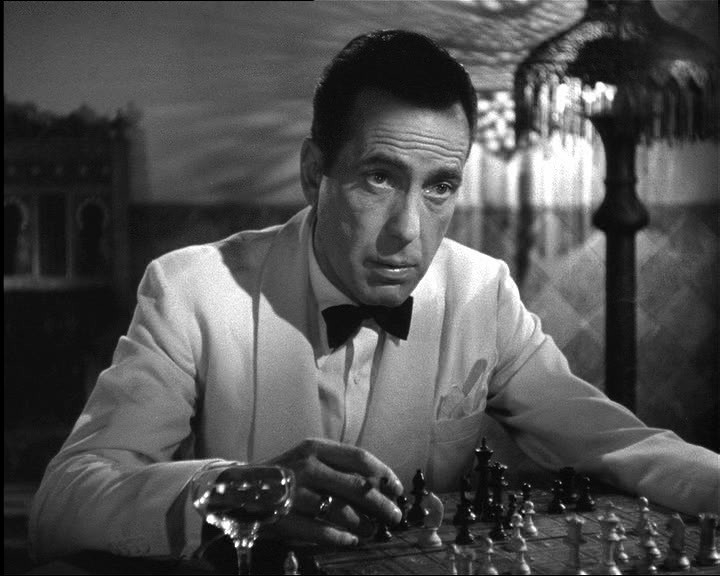
Read the whole thing here, for and this picture

and more great lines like "a candy ban in public schools turned Austin High School into an underground candy market that resembles 'Willy-Wonka-meets-Casablanca',


HT Reason

Thursday, January 25, 2007

Cigarette Taxes & Organized Crime

Radley Balko has a great article over at Cato about the rise of cigarette taxes and the associated rise in crime. He makes the point that when the price of an item is raised by methods other than market forces (such as taxation), market forces will still work to lower them. When cigarettes are taxed to a significant percent of their actual cost, the incentive to smuggle them and avoid the taxes becomes tremendous. Balko quotes New York city tax official Robert Shepherd as saying ''It is literally more profitable to hijack a cigarette delivery truck than an armored truck.'' Since the profits are so large, powerful interests begin to take advantage of the opportunities.

In recent years, New York City's black or ''gray'' cigarette market has aided a bevy of international terrorist organizations and nefarious elements, including the Russian mafia, Chinatown gangs, the Irish Republican Army, Hezbollah and al-Qaida. In 2002, Hezbollah ringleader Mohammad Youssef Hammoud was arrested in Charlotte, N.C., for operating a cigarette smuggling ring that bought low-tax cigarettes in North Carolina and sold them on the black market in high-tax Michigan. Just one van of cigarettes making the trip could bring in as much as $10,000 for the terrorist group.

London is one of the few cities where cigarette taxes are higher than they are in New York. No surprise, the Irish Republican Army has exploited those taxes for years, and uses smuggling to partially fund its operations.

The rise in crime is so pronounced that Sweden and Canada have both reduced their taxes on cigarettes, deciding that the costs and side effects of the taxes outweighed the benefits.

This situation strikes me as a perfect example of the Law of Unintended Consequences. Politicians and voters want to do something about the "Smoking Problem," so they create a tax. The thought is that by making the death-sticks more expensive, they will encourage the weak-willed to quit their nasty habit without actually banning it, thus gaining revenue for the City and improving the common good by reducing disease and odor. However, while some people do quit smoking, and some money is made, the Unintended Consequences cost the government lives and money by increasing Organized Crime activity.

Even if you think that it is a legitimate role of Government to discourage smoking through taxation (which I don't) and you think that taxing cigarettes will stop significant numbers of people from smoking (which I don't) and you don't care that the people most likely to continue smoking and paying the new taxes are the poor, making the tax extremely regressive (which I also don't, so we would agree there), the benefits must be weighed against the costs. If it turns out that the taxes cost more in crime, increased policing, and lost business in the community, and don't save more lives from smoking than they cost in other ways, the tax should be abandoned.

The fact that the tax was devised with the best of intentions (namely thinking for you and taking your money) does not change the fact that those intentions are not effected by the tax. If a law causes more harm than good it is a bad law, period. This goes for any law. It doesn't matter what you felt the law would do, or who you thought the law would help. What matters is what the law does. Just because the new minimum wage was passed by someone wanting to help the poor does not change the fact that it will hurt them. Your intentions are not sufficient, they must be instantiated, and the fact that you "want to help" does not automatically justify anything. The consequences of any action must always be taken into account.

Template Designed by Douglas Bowman - Updated to Beta by: Blogger Team
Modified for 3-Column Layout by Hoctro